To unblock a drain safely, start with the simple things: pull out any hair or gunk you can see, use a plunger, flush with hot (not boiling) tap water, and clean out the trap under the sink. If one drain is still blocked after that, or several drains are slow at once, stop – that’s a blockage further down the line, and it needs a plumber.
This guide covers how to unblock a badly blocked drain without making it worse: what actually works, what baking soda and vinegar can and can’t do, why caustic drain cleaners are a risk, and the signs that it’s time to call.
- First, work out what’s blocked
- Step 1: Clear what you can see
- Step 2: Use a plunger
- Step 3: Hot water – but not boiling
- Step 4: Clean out the trap under the sink
- Step 5: A hand drain snake
- Baking soda and vinegar vs drain cleaner
- What not to do
- When to stop and call a plumber
- How to stop it happening again
- Frequently asked questions
First, work out what’s blocked
Before you reach for a plunger, check whether it’s one drain or the whole house.
- One fixture is slow – a sink, basin or shower on its own. The blockage is usually close by, in the plughole, the trap or the first metre of pipe. This is the kind you can often fix yourself.
- Several fixtures are slow at once, or the toilet gurgles when the shower drains. The blockage is in the main sewer line, past where the household drains join. DIY methods won’t reach it.
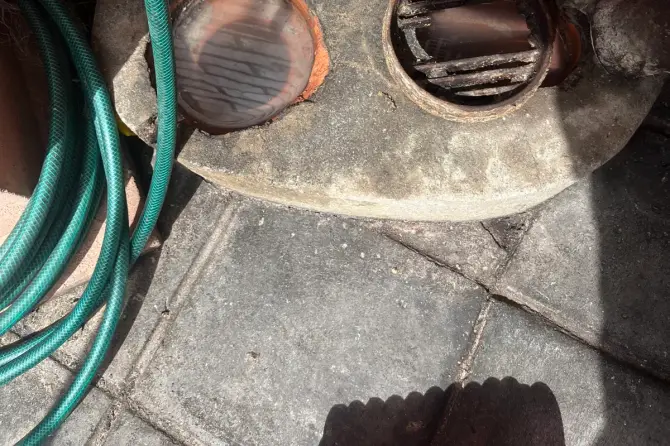
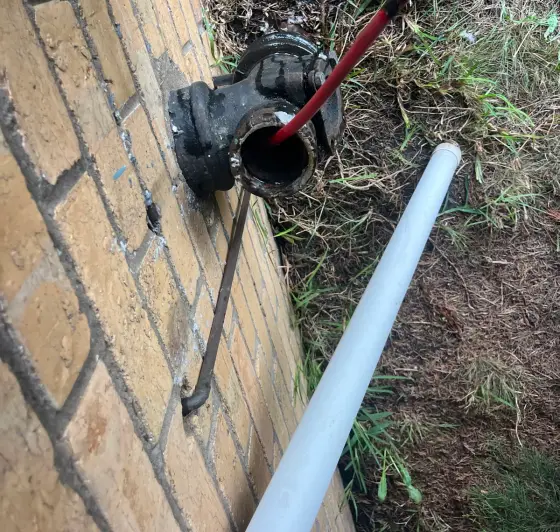
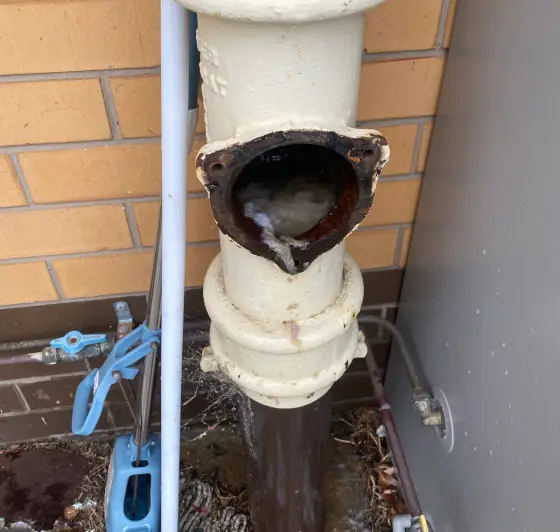
- Water or sewage is coming up outside through the overflow relief gully (the vented pipe in the yard) or the inspection shaft. The sewer is blocked: stop using water and see our guide to who pays for a blocked sewer.
Step 1: Clear what you can see
Wear rubber gloves, take out the plug or strainer and remove any hair, soap scum or food scraps you can reach. In showers and basins, hair wrapped around the plug is a common cause, and this alone often fixes it.
Step 2: Use a plunger
Use a flat-cupped sink plunger for sinks, basins and showers, and a flanged toilet plunger (the one with the extra rubber sleeve) for toilets.
- Leave a few centimetres of water in the sink or bath so the cup is covered.
- Block the overflow hole with a damp cloth – otherwise the pressure escapes through it. In a double sink, block the other plughole too.
- Seat the plunger over the drain and push down gently first to push the air out.
- Pump firmly up and down ten or so times, keeping the seal, then pull away sharply.
- Repeat a few times. If the water starts to drain, run warm water to flush the loosened blockage through.
For a blocked toilet, use gentle, steady strokes rather than force, and don’t keep flushing to “test” it – each flush adds water to a bowl that can’t empty. Our blocked toilet page explains what to do if it overflows.
Step 3: Hot water – but not boiling
A few litres of very hot tap water poured slowly down a kitchen sink can soften greasy build-up. Use hot water rather than boiling: boiling water can soften PVC pipe joints and can crack a porcelain basin or toilet bowl. Never pour hot water into a toilet, or into a drain that is full of standing water or has had chemical cleaner in it.
Hot water only moves grease along, too. Barwon Water warns that fats, oils and grease solidify as they cool and are a common cause of sewer blockages, so a few kettles today can become a bigger blockage further down tomorrow.
Step 4: Clean out the trap under the sink
Under most kitchen sinks and bathroom basins is a U-shaped or bottle-shaped trap that holds water to keep sewer smells out. It’s also where things get caught.
- Put a bucket under the trap and have old towels ready.
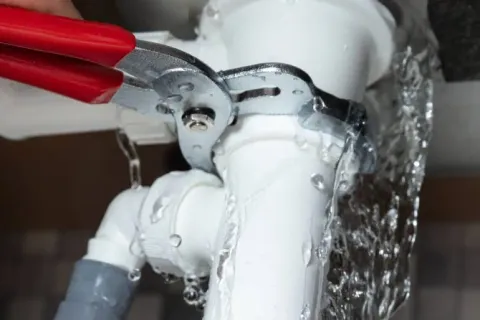
- Unscrew the plastic nuts by hand (or the cleaning cap at the bottom of a bottle trap).
- Empty the trap into the bucket and clean it out with an old toothbrush.
- Refit it, hand-tight, making sure the washers are seated, then run water and check for drips.
If the trap was clean and the sink is still blocked, the blockage is in the wall pipe or further on.
Step 5: A hand drain snake
A hand drain snake (a thin, flexible auger you wind into the pipe) can reach hair and gunk just past the trap in a basin or shower. Feed it in slowly, turn the handle when you feel resistance, and pull the blockage back out rather than pushing it further in.
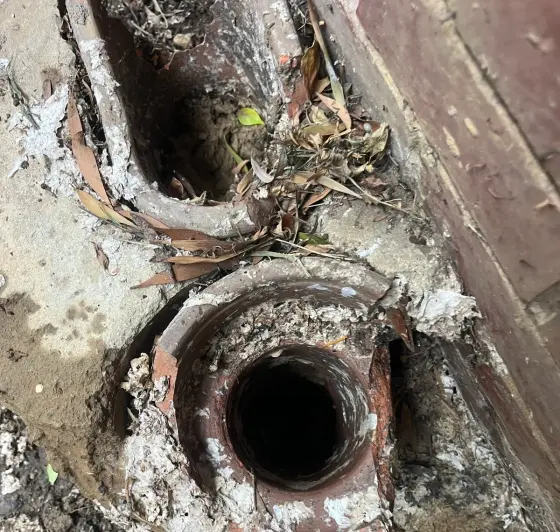
Don’t force a snake through a toilet bowl – the metal can scratch the porcelain. And if the snake hits something solid and won’t pass, stop. It may be a hard object, tree roots or a broken pipe, and pushing harder can make it worse.
Baking soda and vinegar vs drain cleaner
The fizz from baking soda and vinegar looks impressive, but it’s mostly a mild reaction that doesn’t do much to a solid blockage. It can help freshen a drain or loosen light soap scum when followed with hot water, and it’s cheap and safe to try. It won’t clear wipes, a wad of paper, a toy or tree roots.
Chemical drain cleaners are a different matter. Many are caustic or acidic, and:
- They can damage pipes, and burn skin and eyes if the drain splashes back.
- If they don’t work, the drain is left full of chemical water.
- Mixing products can be dangerous. The Victorian Government’s Better Health Channel lists drain cleaners among household products containing potentially dangerous chemicals, and warns that some chemicals can create a poisonous gas or liquid when mixed.
If someone swallows, inhales or is splashed by drain cleaner, call the Victorian Poisons Information Centre on 13 11 26 (24 hours, 7 days). In an emergency, call 000. And if you’ve already used a chemical cleaner, tell your plumber before they start.
What not to do
- Don’t mix drain cleaners, or follow one with another.
- Don’t keep flushing a blocked toilet.
- Don’t use a wire coat hanger in a toilet or deep in a pipe – it scratches and can snag.
- Don’t open the inspection shaft cap to “let it out” – sewage can spill into your yard.
- Don’t lift council stormwater pit lids. The City of Greater Geelong says residents must not lift or move them under any circumstances.
When to stop and call a plumber
Call a plumber if:
- more than one drain is slow, or the toilet gurgles when another fixture drains
- water or sewage is coming up through the overflow relief gully or a floor waste
- the same drain blocks again within weeks
- there’s a bad sewer smell inside the house
- you’ve tried a plunger and cleaned the trap and nothing has changed
- something solid has gone down the drain or toilet
Plumbers use tools that reach where DIY can’t – a high-pressure water jetter that scours the pipe clean, and a drain camera that shows what’s causing the blockage. Our drain camera and jet blasting page explains how they work, and our blocked drains Geelong service covers the rest. Call us on 0447 134 432 – we’re on call 24/7 for overflows.
How to stop it happening again
- Only flush the 3Ps – poo, pee and (toilet) paper. Barwon Water says non-flushable wipes make up most of the rubbish in sewer blockages, and only wipes meeting AS/NZS 5328:2022 are flushable.
- Let fat and oil cool, wipe or pour it into a foil-lined container, and put it in the bin – as Barwon Water recommends.
- Use a sink strainer in the kitchen and a hair catcher in the shower.
- Keep gutters and driveway pits clear of leaves so stormwater drains keep flowing.
Frequently asked questions
Does baking soda and vinegar unblock drains?
Not usually. Baking soda and vinegar can freshen a drain and help loosen light soap scum when followed with hot water, but it won’t shift a solid blockage such as wipes, hair clumps, food or tree roots. If a drain is still slow after one try, use a plunger or clean the trap instead.
Are chemical drain cleaners safe to use?
They carry real risks. Many are caustic and can damage pipes and burn skin or eyes if the drain splashes back, and mixing products can create a poisonous gas or liquid. If you do use one, follow the label exactly, never mix products, and tell your plumber before they start work.
How do I unblock a drain with standing water?
Use a plunger rather than chemicals or boiling water. Block the overflow, make sure the plunger cup is covered with water, and pump firmly a dozen times. If the water doesn’t move after a few rounds, clean the trap under the sink. If that doesn’t work, the blockage is further down.
Why do my drains keep blocking?
Drains that keep blocking usually have an underlying cause: grease building up in the pipe, wipes being flushed, tree roots getting into joints, or a sagging or broken section that catches debris. A drain camera inspection shows exactly what it is, so it can be fixed rather than cleared again and again.
When is a blocked drain an emergency?
A blocked drain is an emergency when sewage is overflowing inside or outside the house, or when the only toilet is blocked. Stop using water and call a plumber. If sewage is overflowing outside with nothing running inside, Barwon Water asks you to call it on 1300 656 007.
Sources
The official pages this guide is based on, checked on 16 October 2026: