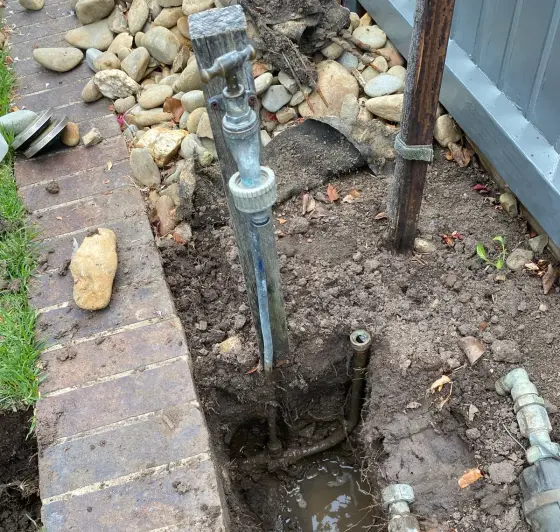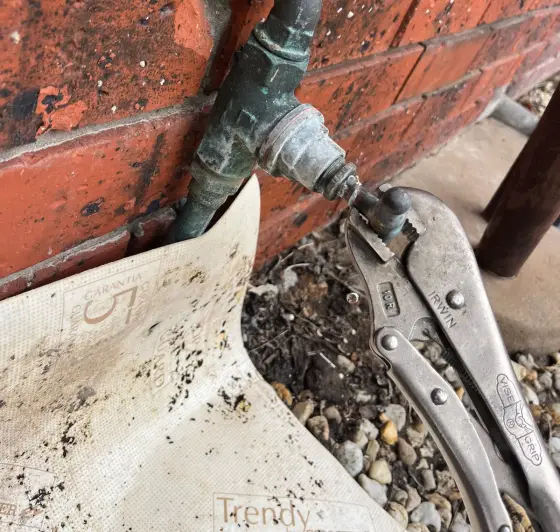
Plumbers detect hidden leaks by working from the outside in: they confirm there’s a leak at the water meter, rule out toilets, taps and appliances, then narrow down the pipework with pressure testing, moisture readings and detection tools. The aim is to pinpoint the leak before anything is cut open, so the repair stays small. Here’s how each step works, the signs of a hidden water leak to watch for, and the checks you can do yourself before you call.
- Signs of a hidden water leak
- Step 1: Confirm the leak at the water meter
- Step 2: Rule out the leaks you can see
- Step 3: Narrow down where the water is going
- Step 4: Open up only what’s needed, then repair and test
- What affects the cost of leak detection?
- Who pays to fix a hidden leak?
- When to call a plumber
- Frequently asked questions
Signs of a hidden water leak
Hidden leaks are more common than most people think. Barwon Water says an average of one in ten properties has a leak the owner may not be aware of, and that leaks can happen in new homes and old homes, inside or outside, above or under the ground. These are the signs worth taking seriously:
- A water bill that jumps with no change in how you use water.
- A water meter that keeps moving when every tap and appliance is off.
- A potential leak notification from Barwon Water, if you have a digital meter.
- Damp patches, bubbling or flaking paint, or a swollen skirting board.
- Mould or a musty smell that comes back no matter how often you clean.
- A warm spot on a tiled or concrete floor, which can point to a leaking hot water pipe.
- Lifting or soft floorboards, cracked tiles or loose tiles in the shower.
- A patch of lawn that stays soggy, or water pooling near the meter on a dry day.
One sign alone can have another cause. Two or three together, especially with a moving meter, usually mean a leak.
Step 1: Confirm the leak at the water meter
Before anyone goes looking for a leak, it pays to prove there is one. Barwon Water sets out a simple meter test for mechanical meters that you can do yourself:
- Turn off every tap and appliance that uses water – dishwasher, washing machine, evaporative cooler, hot water unit and irrigation – but leave the stop tap next to each toilet on.
- Make sure the back of the toilet pan is dry, then place a piece of toilet paper at the back of the bowl, or put 6–8 drops of food dye in the cistern. Don’t flush.
- Find your water meter. On a house it’s outside, usually near the front gate or fence. In a unit it may be near your front door or in a service cupboard.
- Check the stop tap on the meter is on, then note the numbers or take a photo.
- Wait two hours without anyone using water.
- Check the toilet paper or dye, then read the meter again. If the reading has changed, repeat the test to be sure before you call a licensed plumber.
If you have a digital meter, Barwon Water can alert you. It typically sends a potential leak notification after more than 5 litres an hour has flowed to a property continuously for more than 24 hours, every day for seven days, and tries to alert you within a day if more than 1,000 litres flows in 24 hours.
Burst pipe spraying water? Skip the meter test – turn off the water at the main isolation valve and call a plumber now.
Step 2: Rule out the leaks you can see
A plumber’s first job is to rule out the easy ones before chasing anything hidden. A toilet that keeps running into the bowl, a dripping tap, a hot water relief valve that won’t stop discharging, a weeping washing machine hose or a garden tap left cracked open will all move the meter. If the meter stops once these are dealt with, there may be no hidden leak at all – just a tap or toilet repair.
Step 3: Narrow down where the water is going
Once the visible suspects are cleared, the search moves to the pipework itself. Plumbers use a mix of methods, because no single method finds every leak.
Isolating sections of pipe
Turning off isolation valves one at a time and watching the meter shows which part of the system is losing water – the house, the yard, the hot water side or the cold.
Pressure testing
A section of pipe is closed off and pressurised, then watched on a gauge. If the pressure drops, that section is leaking. Pressure testing is also how a repair is proven afterwards.
Moisture readings
Moisture meters take readings across walls, floors and skirting boards to map where the wet area is strongest. Water travels along framing and slabs, so the damp patch you can see isn’t always directly over the leak.
Listening for the leak
Water escaping under pressure makes noise. Acoustic listening equipment amplifies that sound through floors, walls and the ground, so a plumber can follow it to the loudest point.
Thermal imaging
A thermal camera shows temperature differences on a surface. It’s most useful for hot water pipes, where a leak shows as a warm patch in a wall or slab, and for spotting cold, wet areas behind plaster.
Tracer gas and dye
For the hardest leaks, a safe tracer gas can be pushed through an empty pipe and picked up at the surface where it escapes. Dye is the low-tech version, used for toilets, showers and cisterns.
Barwon Water lists similar methods – thermography, ground-penetrating radar and acoustic signalling – among its options for finding leaks in its own network. Not every plumber carries every tool, so ask what methods will be used when you book.
Step 4: Open up only what’s needed, then repair and test
When the leak is pinpointed, the plumber opens the smallest section of wall, floor or ground needed to reach it, repairs or replaces the damaged pipe, and pressure tests the repair. Watching the meter again afterwards confirms the leak has stopped. If the cause was something that will happen again – an old section of pipe, a poor joint or high mains pressure – a good plumber will tell you, and fitting a pressure-limiting valve is one common fix for high pressure.
What affects the cost of leak detection?
There’s no set price for finding a leak, because no two leaks are the same. What drives the cost:
- How hidden the leak is, and how many tests it takes to pinpoint.
- Where the pipe runs – inside a wall, under a slab, under timber floors or out in the yard.
- Access, and how much has to be opened up and made good afterwards.
- The repair itself – a single joint, a section of pipe or a longer replacement.
- Timing – after-hours callouts may affect pricing.
Doing the meter test yourself first, and noting when you first saw the signs, saves time on the day. If you’ve had an unusually high bill from a leak you couldn’t reasonably have detected, Barwon Water says you may be eligible for a one-off allowance towards part of the extra usage charges, so ask them.
Who pays to fix a hidden leak?
It depends on where the leak is. Barwon Water repairs leaks on the meter itself or on the network side of it. The property owner is responsible for all pipes from the meter to the house and within the property, including garden taps. If you rent, tell your landlord or agent as soon as you notice a leak – our rental plumbing checklist covers what renters and landlords should know.
When to call a plumber
If the meter test shows a leak, or you’re seeing damp, mould or a lawn that won’t dry, call a plumber before the damage spreads. Leaks are a big part of our work: in the last 12 months we’ve done 899 jobs that involved a leak, including 53 leak-detection jobs. Our leak detection and burst pipe repairs in Geelong page explains how we work and how to book. For a burst pipe, our 24/7 emergency plumbing team will give you an honest arrival time when you call.
Frequently asked questions
Can a plumber find a leak without breaking walls?
Often, yes. Meter tests, isolating sections of pipe, pressure testing, moisture readings and detection tools let a plumber narrow a leak down before anything is opened. Some leaks under slabs or in tight spots still need a small section opened to reach and repair the pipe, but pinpointing first keeps that section as small as possible.
Does every leak show up on the water meter?
Most do, but slow leaks can be hard to spot. Barwon Water says it can take up to two hours for a small or slow leak to show on a mechanical meter, and that a continuous flow of water isn’t always a leak. That’s why it recommends repeating the test before you call a plumber.
How much water can a hidden leak waste?
More than you’d expect. Barwon Water says leaks lose an average of 15 litres an hour, and even slow leaks can add a significant cost to your bill. A hidden leak runs around the clock, so do the meter test whenever your bill looks wrong.
Can a new house have a hidden leak?
Yes. Barwon Water says pipes, hot water services, fixtures and fittings can all leak regardless of age, location or how they were built, in new and old homes alike. A nail or screw through a pipe during building or a poorly made joint can leak from day one, so check the meter if your bill looks high.
Sources
The official pages this guide is based on, checked on 16 October 2026: