If you have no hot water, first check whether it’s every hot tap or just one, then check the power or gas supply to the system: a tripped switch, an off-peak heating cycle, a pilot light that has gone out or an empty gas bottle explains a lot of cases. If those simple checks don’t find it, or you see a leak, scorch marks or smell gas, stop and call a plumber.
The checks below are all safe for a homeowner to do. None of them involve taking covers off, touching gas fittings or adjusting valves, and they’ll either get your hot water back or give us useful information when you call.
Safety first: never remove covers from a hot water system, adjust gas fittings or tamper with the relief valve or tempering valve. If you smell gas, don’t relight anything. Follow our guide on what to do if you smell gas.
- Start with three quick questions
- Electric storage hot water systems
- Gas storage hot water systems
- Continuous flow (instantaneous) systems
- Solar and heat pump systems
- Stop and call a plumber if you notice any of these
- What to tell us when you call
- Frequently asked questions
Start with three quick questions
- Is it every hot tap, or just one? If the kitchen has hot water but the shower doesn’t, the problem is likely the shower mixer, not the hot water system. Our tap, toilet, shower and sink repairs cover that.
- Is there no hot water at all, or is it just lukewarm or running out fast? Lukewarm or short showers point to a different set of faults from a system that has stopped altogether.
- Is anything else off? If the power is out in part of the house, or your gas cooktop won’t light either, the supply is the problem, not the hot water system.
Electric storage hot water systems
Electric storage systems heat a tank of water with an element, so the first place to look is your switchboard.
- Check the switchboard. Look for a tripped circuit breaker or safety switch labelled hot water, HWS or similar. You can reset it once. If it trips again, leave it off and call us, because something in the system is faulty.
- Think about your tariff. Many electric systems are on an off-peak or controlled-load supply that only heats the water at certain times, often overnight. If the household has used a lot of hot water, the tank may simply be empty until the next heating period.
- Check any isolating switch near the system. Some systems have a switch on the wall nearby. Make sure it’s on, but don’t open the unit itself.
If the breaker keeps tripping or the water only ever gets lukewarm, the element or thermostat may have failed. Our guide to the signs your electric hot water system needs repair covers the warning signs.
Gas storage hot water systems
- Check the gas supply. If your cooktop or heater won’t light either, the problem is the gas supply, not the hot water system. On bottled gas, the cylinder may be empty, so check the gauge or switch to the full bottle if you have one.
- Look for the pilot light. Most gas storage systems have a small viewing window. If the pilot has gone out, you can relight it only if the manufacturer’s instructions on the unit explain how, and only if you can’t smell gas. If it won’t stay lit, stop there and call us.
- Check for wind and weather. Strong wind can blow out the pilot on an outdoor unit. If it happens again and again, it needs looking at.
For the faults we see most on gas storage systems, from thermocouples to sediment, see common gas hot water repairs and what causes them.
Continuous flow (instantaneous) systems
- Check the power. Gas continuous flow units still need electricity to ignite and run their controls. If the power point or isolating switch is off, or the power is out, you won’t get hot water.
- Read the error code. If you have a temperature controller in the kitchen or bathroom, note any error code on its display. Your manual will explain it, and it tells us which parts to bring.
- Turn the tap up. These units need a minimum flow to fire. A tap barely open, or a blocked aerator or shower head, may not be enough to start the heater.
- Check the gas, as above. On bottled gas, an empty cylinder is a common cause.
Solar and heat pump systems
Solar systems rely on a gas or electric booster when the sun isn’t enough, so after a run of cloudy days, check the booster is switched on and that any booster timer hasn’t been changed. Our guide to how solar hot water systems work explains the booster in more detail.
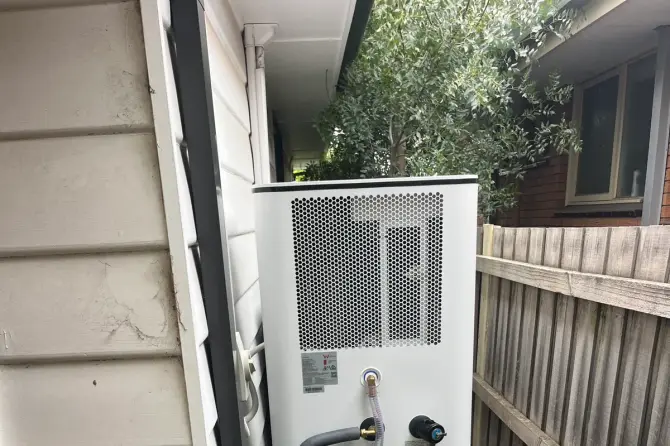
Heat pumps need power, so check the switchboard and any isolating switch. They also heat more slowly in cold weather, so on a cold Geelong morning a heavily used tank can take longer to recover. If the unit is running but never gets hot, or shows a fault light, call us. Here’s more on how a heat pump hot water system works.
Stop and call a plumber if you notice any of these
- You can smell gas near the system
- Water is leaking from the tank, the pipes or the base of the unit
- The relief valve is discharging water constantly
- There are scorch marks or soot around a gas unit
- The safety switch trips again after you reset it
- The water is rusty, smells bad or comes out far too hot
- The pilot won’t light, or won’t stay lit
Any of these means the system needs a licensed plumber, and some, like a gas smell or a leaking tank, shouldn’t wait. Our emergency plumbers are on call 24/7, including weekends and public holidays.
What to tell us when you call
A few details help us arrive with the right parts. Our hot water plumbers carry the parts to fix most faults in one visit, and the more we know, the better the chance of a first-visit fix.
- The type of system: electric, gas, continuous flow, solar or heat pump
- Roughly how old it is, if you know
- What you’ve already checked, and what you found
- Any error code on the controller or display
- Whether there’s any leaking, noise or smell
Then call 0447 134 432 or book through our hot water system repair and installation page. If the system is past repair, our guide on which hot water system suits a Geelong home will help you weigh up the replacement.
Frequently asked questions
Why is my hot water suddenly not working?
Hot water usually stops suddenly because of a tripped circuit breaker or safety switch on an electric system, a pilot light that has gone out or a gas supply problem on a gas system, or a power cut to a continuous flow unit. If the simple checks don’t bring it back, the element, thermostat or ignition parts may have failed.
Why do I have hot water in one tap but not the others?
If one tap has no hot water but the rest are fine, the hot water system is working and the problem is at that tap or mixer, usually a worn or failed cartridge. If several outlets in one part of the house are affected, a valve on that line may be the cause, so it’s worth getting a plumber to check.
Can I relight the pilot light on my gas hot water system?
You can relight a pilot only if the manufacturer’s instructions on the unit explain how, and only when you can’t smell gas. Never remove covers or adjust gas fittings. If the pilot won’t light, keeps going out, or you notice soot or scorching, turn it off and call a plumber.
How long do hot water systems last?
Most hot water systems last between 8 and 15 years, depending on the type of unit, water quality, how much it’s used and how well it’s maintained. A system near the end of that range that breaks down is worth a conversation about repair versus replacement.
Is no hot water an emergency?
It can be. No hot water is one of the problems our 24/7 emergency line covers, alongside burst pipes, blocked drains and gas leaks, so you can call any time, day or night. Call straight away if water is leaking from the system, the relief valve won’t stop discharging, or you smell gas – those shouldn’t wait.